
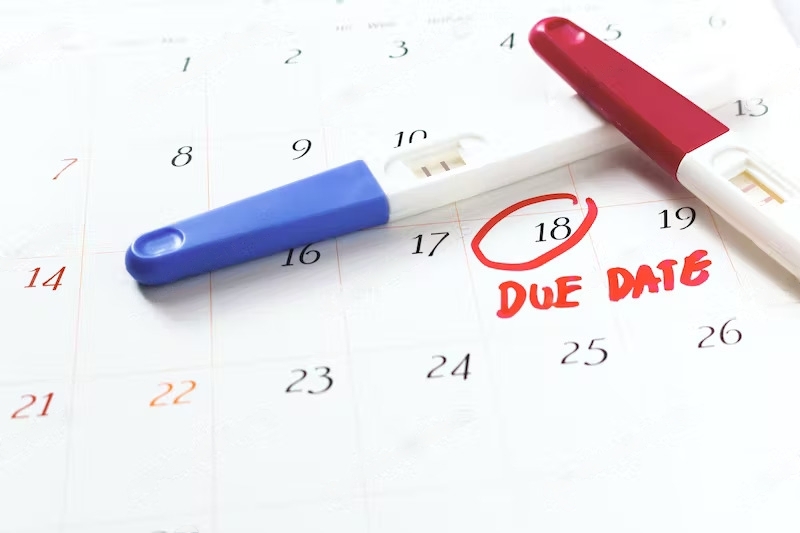
Tick-tock, tick-tock—the countdown to one of the most miraculous moments of your life has begun. Anticipation swirls in the air as you eagerly await the arrival of your little bundle of joy. But when exactly will that long-awaited day arrive? Fear not, for we bring you the key to unraveling the enigma of time—the captivating world of the Due Date Calculator.
What is the Due Date During Pregnancy?
The due date, or estimated due date (EDD), is a calculation that predicts when you will likely give birth. Knowing your EDD is important as you prepare for your baby’s arrival. However, it’s important to remember that the due date is only an estimation, and not a strict deadline for your baby’s arrival. In fact, only 4 percent of babies are born on their EDD. To calculate your due date, our Pregnancy Due Date Calculator (or estimated Due Date Calculator) can be a helpful tool. You can use it by inputting your last period date.
Pregnancy Due Date Calculator
🤰 Due Date Calculator
Most Accurate Pregnancy Calculator with Week-by-Week Tracking
📊 Why Our Due Date Calculator is Different
Calculate your baby’s due date with medical-grade accuracy using multiple methods: LMP, conception date, ultrasound, or IVF transfer. Get personalized week-by-week pregnancy tracking, appointment reminders, baby size comparisons, and a downloadable pregnancy calendar.
What makes us the best: Unlike basic calculators, we provide trimester breakdowns, medical milestone tracking, nutrition guidance, symptom tracking, and printable resources – everything you need in one place.
❓ Frequently Asked Questions
🥗 Pregnancy Nutrition Guide
Essential nutrients and foods for a healthy pregnancy at every stage.
🥬 Folate/Folic Acid
Why: Prevents neural tube defects
Daily Need: 600-800 mcg
Sources: Leafy greens, beans, fortified cereals, citrus fruits
🥩 Iron
Why: Prevents anemia, supports baby’s growth
Daily Need: 27 mg
Sources: Red meat, poultry, beans, spinach, fortified cereals
🥛 Calcium
Why: Builds baby’s bones and teeth
Daily Need: 1,000 mg
Sources: Dairy products, fortified plant milk, tofu, sardines
🐟 Omega-3 (DHA)
Why: Brain and eye development
Daily Need: 200-300 mg DHA
Sources: Salmon, sardines, walnuts, chia seeds, DHA supplements
💊 Vitamin D
Why: Bone health, immune function
Daily Need: 600 IU
Sources: Sunlight, fortified milk, fatty fish, egg yolks
🍖 Protein
Why: Tissue and cell growth
Daily Need: 70-100g
Sources: Lean meat, poultry, fish, eggs, legumes, nuts
📋 Common Pregnancy Symptoms by Trimester
Weeks 6-14
First & Third Trimester
Throughout
Weeks 16-25
Second & Third Trimester
Third Trimester
How do I Use the Due Date Calculator?
Simply enter the date of the first day of your most recent period into our pregnancy calculation tool, change the typical cycle length, then click “submit” to learn when you are due. Your cycle length is the total number of days between periods, counting from the first day of your period to the day before your subsequent period begins.
You will then be given the choice to sign up for our pregnancy email and your anticipated due date. To assist you and your unborn child have the best pregnancy possible, this weekly newsletter brings you interesting pregnancy information, practical advice, and fantastic food ideas.
Related: Ovulation Calculator I Know Your Most Fertile Days
What if My Periods are Irregular?
You may still use the due date calculator if your periods were irregular before you became pregnant. Simply select your typical cycle length. But keep in mind that the most precise approach to determine your due date is through an ultrasound.
How Accurate is the Due Date?
The due date calculator provides an estimated due date. It is calculated by adding 280 days (40 weeks) to the first day of your previous menstrual cycle. This is based on a 28-day cycle but is modified for longer or shorter periods.
Your menstruation and ovulation are counted as the first two weeks of pregnancy. If you have the baby on your due date, your baby has been growing for 38 weeks, not 40, but you are still considered 40 weeks pregnant.
Remember that only around 5% of kids are delivered on their due date, so this is simply an estimate.
Will My Due Date Change as the Pregnancy Progresses?
By 10 weeks, you will have your first appointment with the midwife, sometimes known as the “booking appointment.” You will be given the option to have a dating ultrasound scan at that session.
With the help of this scan, you may determine how many weeks along you are and determine a more precise due date. Additionally, you’ll be able to learn whether you’re expecting more than one child and watch your child’s growth.
However, if you want to know your baby’s due date right away and are eager, use our due date calculator!
What Should I Do Next?
You might be able to self-refer to your neighborhood maternity unit for prenatal care if you don’t already have a midwife.
If you are unable to refer yourself or believe your pregnancy may be high-risk, speak with your doctor. For instance, if you have a chronic illness, encountered problems during a prior pregnancy, or had a late loss or stillbirth. The midwifery team will be made aware of your pregnancy by your GP.
A date for your initial visit with a midwife will be provided. This should occur before you reach your tenth week of pregnancy.
We are aware that being pregnant may be overwhelming. We developed our Due Date Calculator tool to help reduce some of this worry by providing you with a set of individualized pregnancy suggestions.
The Joy of Anticipation: Milestones Along the Way
Your pregnancy is divided into trimesters, each characterized by distinct changes and milestones. Let’s take a closer look at these remarkable stages of development:
First Trimester (Weeks 1-12)
- The fertilization journey begins.
- Early pregnancy symptoms emerge.
- The tiny miracle is referred to as an embryo.
Second Trimester (Weeks 13-27)
- Morning sickness may subside.
- The baby’s gender becomes apparent.
- Kicks and movements bring joy and excitement.
Third Trimester (Weeks 28-40)
- The baby’s senses develop rapidly.
- Preparations for childbirth intensify.
- The countdown to meeting your baby begins.
Related: What are iBasal Thermometers?
Conclusion
The amazing experience of being pregnant brings wonder, excitement, and anticipation into your life. The Due Date Calculator is a helpful tool that will enable you to proceed through this trip more confidently and with less difficulty. It gives you the ability to plan ahead and recognize each achievement along the road by giving you an approximate due date and insights into fetal growth.
The Due Date Calculator provides a helpful estimation, but keep in mind that the actual delivery day may differ. Accept your pregnancy for what it is and have faith that nature will deliver your tiny wonder into the world. Get personalized guidance and support from your healthcare professional as you embark on this amazing adventure.
Related: Planning for Pregnancy
Confirm Your Pregnancy Early with Reliable Tests

Frequently Asked Questions
u003cstrongu003eWhat if my Periods are Irregular? How Accurate will the Due Date Calculator be?u003c/strongu003e
The Due Date Calculator takes into account the average length of your menstrual cycle to estimate your due date. If your periods are irregular, the calculator’s prediction may be less precise. However, it can still provide a helpful estimate based on the information available.
u003cstrongu003eCan the Due Date Calculator predict the exact day of Delivery?u003c/strongu003e
The Due Date Calculator provides an estimate based on the information provided. However, it’s essential to remember that only a small percentage of babies are born on their estimated due dates. Nature has its way of determining the perfect time for your little one’s arrival.
u003cstrongu003eAre there any Signs that Labor is Approaching?u003c/strongu003e
As your due date approaches, you may experience certain signs that labor is imminent. These can include the baby dropping lower in your pelvis, a surge in energy levels, the passing of the mucus plug, and the onset of Braxton Hicks contractions. However, it’s important to consult with your healthcare provider for a more accurate assessment.
u003cstrongu003eCan I rely Solely on the Due Date Calculator for my Pregnancy Planning?u003c/strongu003e
While the Due Date Calculator is a helpful tool, it’s recommended to consult with your healthcare provider for personalized guidance throughout your pregnancy journey. They will consider various factors specific to your health and pregnancy and provide you with the most accurate information and support.
u003cstrongu003eWhat if I don’t Remember the First Day of my Last Menstrual Period (LMP)?u003c/strongu003e
If you don’t remember the exact date of your LMP, it’s best to consult with your healthcare provider. They can help you estimate your due date based on other information such as ultrasounds or physical examinations.
Related posts:
 How to Get Pregnant?
 Ovulation Test: Learn How it Works and Know the Best 9 Brands
 Preparing for Pregnancy: What you need to Know
 When Can a Woman Get Pregnant?
 Why Pregnancy Not Happening? 14 Possible Reasons
 Ovulation Calculator I Know Your Most Fertile Days
 Can You Get Pregnant When Not Ovulating?
 Will Ovulation Test Be Positive If Pregnant?
 How Many Days After Sex Can You Take A Pregnancy Test?
 When To Conceive To Have A Baby On New Year?
 Ovulate Before Trigger Shot? Your Body is Telling You Something
 Why Are My Breasts Not Sore After Ovulation This Month
